
Research Area: Environmental and Ecological Sciences
Research Specialization: Coastal Biogeochemistry
Name: NAKAKUNI, Masatoshi

Key ward:Seto Inland Sea, material cycling, marine plastics, fatty acids, science and art

Recent Research
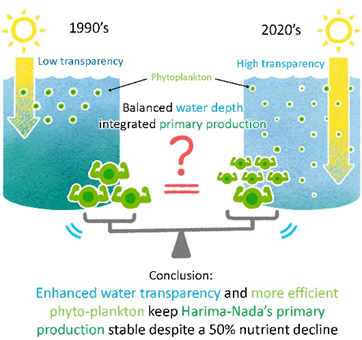
1.Seto Inland Sea: Science in a sea close to people’s lives
The Seto Inland Sea lies right next to where many people live. This makes it especially vulnerable to human activities, and understanding its changes is crucial. Our research covers a wide range of topics in this “sea close to everyday life”—from how nutrients cycle through the water, to the role of phytoplankton that sustains marine ecosystems, to the fate of plastic debris that has become a growing concern in recent years.
2.Tracking the nutrition of plankton
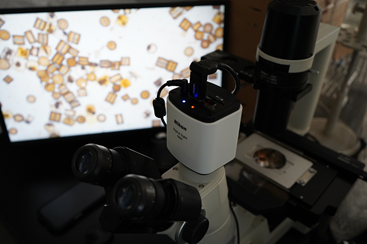
The richness of the sea is not determined by the amount of phytoplankton alone. Fatty acids such as EPA and DHA produced by phytoplankton are passed along to zooplankton, fish, and ultimately to us. We analyze the fatty acids of plankton in the Seto Inland Sea to reveal how the “nutritional quality” underpinning the food web is changing.
3.Where science meets art
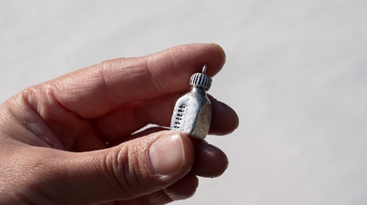
Changes in the sea are difficult to communicate through data alone. By collaborating with artists, we transform seafloor sediments, observational data, and plankton into artworks and exhibitions. We explore ways to convey invisible changes in the sea as something people can feel, think about, and act upon.
Publications
Nakakuni et al. (2026) Sustained phytoplankton productivity despite declining dissolved inorganic nitrogen
levels in Harima-Nada, eastern Seto Inland Sea, Japan. Cell Reports Sustainability.
Nakakuni et al. (2024) Convergence zones of coastal waters as hotspots for floating microplastic accumulation.
Marine Pollution Bulletin. 206, 116691.
Nakakuni et al. (2024) Seasonal variation in pore water nutrients and their fluxes from the bottom sediments in
Harima Nada, Seto Inland Sea. Journal of Oceanography. 80, 219–232.
Nakakuni et al. (2023) Organic compounds in aquatic sediments analyzed by pyrolysis–GC–MS with
tetramethylammonium hydroxide (TMAH) and alkaline CuO oxidation methods. Journal of Analytical and
Applied Pyrolysis. 172, 106016.
Nakakuni et al. (2021) Seagrass contributes substantially to the sedimentary lignin pool in an estuarine seagrass
meadow. Science of the Total Environment. 793, 148488.