
Research Area: Environmental Science
Research Specialization: Evolutionary Ecology
Name: YASUI, Yukio

Keywords: evolution, adaptation, sexual selection, mating behavior
“The Trilogy on the Evolution of Sex” is Complete
Prof. Dr. Yukio Yasui (Evolutionary Biology and Entomology), Faculty of Agriculture, Kagawa University
Following the “Second Paper,” for which a press release was issued on March 24, 2026, the “Third Paper on the Evolution of Sex” has been published in the “Journal of Evolutionary Biology” (the European Society for Evolutionary Biology). This marks the completion of the trilogy of research on the theory of “the evolution of sex,” which has been my life’s work. This article serves as a general introduction to the trilogy and explains the content step by step, but if you’d like a quick overview of the third paper, please click this icon to read the press release for the third paper.

Paper 1: Yasui, Y., Hasegawa, E. The origination events of gametic sexual reproduction and anisogamy. Journal of Ethology 40, 273–284 (2022). https://doi.org/10.1007/s10164-022-00760-3 (Proposed the “Seesaw effect” and the “inflated isogamy” hypothesis.)
Paper 2: Yasui, Y. Double-income anisogamy offsets the twofold cost of sex through resource defense. Journal of Ethology 44, 189–206 (2026). https://doi.org/10.1007/s10164-026-00885-9 (Proposed the “twofold cost of being single” concept and the “Double-income anisogamy” hypothesis.)
Paper 3: Yasui, Y. “The Twofold Cost of Sex Reconsidered: Meiotic Mechanisms Protect Anisogamous Populations from Invasion by Thelytoky,” Journal of Evolutionary Biology, 2026;, voag069, https://doi.org/10.1093/jeb/voag069 (Proposed the “Meiotic constraint” hypothesis.)
The European Society for Evolutionary Biology has also started sharing information via its blog (in English). Why Doesn’t Thelytoky Replace Anisogamy? – ESEB | JEB Blog
General Introduction
All higher organisms undergo sexual reproduction between males and females (anisogamy). Why is sex necessary, and why are there only two biological sexes (combinations that can mate to produce offspring)—male and female? (Have you ever thought about such fundamental questions? It is those who question what seems self-evident who drive scientific progress.) Because anisogamy involves meiosis, only half of the genome is passed on to offspring, and since half of the offspring become males that cannot reproduce on their own, the population growth rate is only half that of asexual reproduction (thelytoky). The fact that sexual reproduction remains the dominant mode of reproduction despite this “twofold cost of sex” has long been considered one of the greatest mysteries of evolutionary biology. The ancient Greek philosopher Aristotle (ca. 325 BC) also discussed the significance of sex in his “De Generatione Animalium”, and this remains an eternal theme for humanity. Since the 20th century, numerous geniuses—including John Maynard-Smith, Geoffrey A. Parker, and William D. Hamilton—have tackled the problem of the “twofold cost of sex,” but it cannot be said to have been fully explained. The current prevailing theory holds that asexual reproduction, due to its lack of genetic diversity, cannot withstand environmental fluctuations—particularly pathogens and parasites—and thus becomes extinct (the “Red Queen” hypothesis). However, since the cost of sex is twice that of asexual reproduction per generation, after 10 generations the population size will be 210 = 1,024-fold difference. Even if asexual populations are destined to die out in the long term, the sexual populations would lose the short-term competition and go extinct long before that happens (in other words, even the “Red Queen” scenario is too slow). I have continued to ponder this problem for many years since first encountering it during my graduate studies. By refusing to accept the prevailing theory at face value, returning to first principles, and thinking for myself from the ground up—and maintaining this approach for over 30 years—I was finally able to see a coherent narrative emerge. This “Trilogy on the Evolution of Sex” is a synthesis of that work. In the early stages, I was unsure whether to publish my ideas, as I could not properly assess their value. It was at that time that, with the encouragement and cooperation of my old friend Eisuke Hasegawa (then an associate professor at the Faculty of Agriculture, Hokkaido University), I published the first paper in 2022. This paper presented original scenarios regarding the evolution from asexual reproduction to isogamy (how the first sexual individuals obtained mates: the “Seesaw Effect” hypothesis) and the evolution from isogamy to anisogamy (why males were able to reduce gamete size without causing the zygote to die from malnutrition: the “Inflated Isogamy” hypothesis), which astonished the world. Not only did the paper receive the Journal of Ethology Editor’s Choice Award 2022 (Best Paper Award) and achieve the journal’s all-time highest download count, but this work was also selected for Springer Nature’s “Research Highlights 2022 – Evolutionary Biology.” Among the hundreds of academic journals published by Springer Nature—led by “Nature”—and more than 10,000 papers on evolutionary biology published that year, this work was ranked among the nine most impactful papers. Although my collaboration with Eisuke subsequently ended, I went back to the drawing board and published the second and third papers in 2026; both address how anisogamous reproduction was able to curb the spread of thelytokous reproduction. The key point is that, since thelytokous reproduction offers the immediate advantage of doubling the population per generation, anisogamous reproduction must possess a fast process that compensates for its costs immediately rather than a slow process, such as the “Red Queen” scenario, where benefits are returned in later generations. The second paper adopts an evolutionary approach based on the material benefits males provide in every generation, while the third paper takes a completely different approach—a constraint theory in which mechanisms inherent to meiosis immediately render mutations leading to parthenogenesis lethal. The fact that these two ideas were conceived simultaneously, developed into papers and published in the same year is of symbolic significance.
The completion of this trilogy has charted a path toward resolving the long-standing puzzles regarding the origin of gametic sexual reproduction, the differentiation into eggs and sperm (the evolution of females and males), and the evolutionary maintenance of males—which entails a “twofold cost”—in nearly all multicellular organisms. I hope that this research will inspire further experimental verification and related discussions in the future.
Please refer to the links below for the content of each paper.
Evolution of Sex, Paper 1:
Link icon to the commentary (in Japanese and English) by the author of the “Evolution of Sex, Paper 1”

The Evolution of Sex, Paper 2
Link to the press release for “The Second Paper on the Evolution of Sex” (in Japanese and English)
The Third Paper on the Evolution of Sex
Link icon to the “Evolution of Sex, Paper 3” press release (in Japanese and English)
Recent Researches
1. Adaptive significance of insect characters
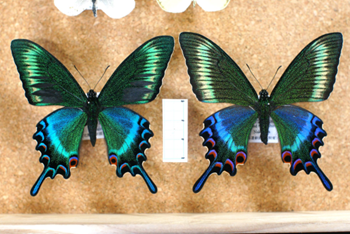
Organisms have evolved many adaptive characters to fit their environments. Genetic variation exists in any characters in species population and the genes coding adaptive characters will increase in frequency in the population through generations. This is natural selection, the evolutionary process advanced by Charles Darwin (1859). In Yasui Laboratory, we study adaptive strategies of insects and other arthropods. In particular, we are exploring adaptive significance and evolutionary function of insect coloration. Why are butterflies so beautiful? – It cannot be easily explained unlike bird ornaments because female butterflies do not choose mates based on male ornaments. We are also interested in the conservation of world insect faunas and biodiversity of Japanese “Satoyama” environments.
2. The evolution of female multiple mating or polyandry
Compared to the large, nutrient-rich eggs, sperm are small and contain little nutrition and can be produced in large quantities. Therefore, males can increase the number of offspring (fitness) by mating with a large number of females, but females cannot increase the number of offspring themselves by mating with many males, only changing the fathers of the offspring. This suggests that males have evolved to mate indiscriminately with many females, while females select a few high-quality males to carefully rear their offspring. In many animals, however, this prediction is not true and females mate with multiple males (polyandry). The exploration of the evolution of female multiple mating is not limited to the elucidation of an animal’s adaptive strategy. Since human males and females, regardless of nationality or ethnicity, have this basic trait, it can be assumed that it was not acquired through culture or religion, but arose and was inherited during the pre-human animal stage. Female polyandry has fascinated researchers around the world as a great mystery that also implicates the origin of human sexuality. The good sperm hypothesis proposed by Yasui (1997) (females induce sperm competition among males through multiple mating and pass on superior genes with high competitive ability to their offspring) and the multiple-mating bet-hedging hypothesis reformulated by Yasui and Garcia-Gonzalez (2016) (i.e., mating with multiple males to spread the risk of male-caused mating failure and infertility) is known worldwide as the basic theory explaining the evolution of multiple mating in females.
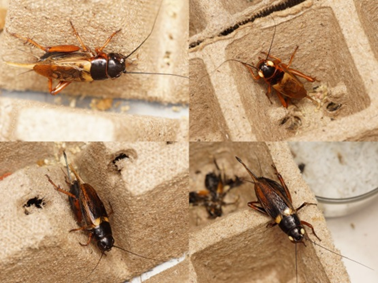
Yasui laboratory is studying this issue using insects such as the Field crickets Gryllus bimaculatus. They are testing these hypotheses using white-eyed mutant strains (inherited recessively relative to black-eyed wild-type strains) that can visually determine which males are fertilized when females mate multiple times. Yasui and Yamamoto (2021), based on the graduation thesis of Yamamoto in 2019, was selected as the Editor’s Choice 2021 in Journal of Ethology published from the Japan Ethological Society and Springer-Nature. Please see the introductory video. You can do this level of research for your thesis.
3. Theoretical studies of evolutionary bet-hedging (with Free PDF)
Organisms live in unpredictable and variable environments. For example, annual plants must produce seeds without knowing whether the next summer will be hot or cool, and seeds must germinate without knowing whether there will be rain or a late frost. Butterflies must lay eggs without knowing whether the leaves will be eaten by cows tomorrow. In such uncertain situations, bet-hedging strategies that avoid or spread risk can be effective in achieving long-term sustainability (a basic theory of long-term survival and closely related to the SDGs). For example, “conservative bet-hedging” strategies evolve, such as producing offspring suited to intermediate temperatures between extreme heat and cool summer so that they can do reasonably well (though not optimally) in either environment, or “diversified bet-hedging” strategies that allow some to survive while others are eaten by dispersing their eggs among different stocks of host plants. I came across the bet-hedging theory in the course of my research on multiple mating in females, and as I worked on this theory for many years, I expanded my interest to life history strategies other than mating, finally arriving at the fundamental principles of biology. Please read my life work paper1 and Japanese translation1 in which I reconstructed the concept of bet-hedging without using esoteric mathematical formulas. This paper was selected as Top Cited Article 2022-2023 in Ecological Research, published by Ecological Society of Japan, and received an award from the publisher, Wiley. The conclusion is that reproduction is an activity that involves creating multiple copies of individuals with the same genes as oneself, which in itself constitutes bet-hedging. All living organisms reproduce, and therefore engage in bet-hedging. Therefore, bet-hedging is a universal law of biology. Join me in considering the fundamental principles of life.
4. evolutionary theory of sexual reproduction
(Seesaw effect and Inflated isogamy hypotheses with free PDF : It has been posted on English Wikipedia 1 & 2).
All higher organisms reproduce sexually between males and females (anisogamy). Why is sex necessary and why are there only two biological sexes (i.e., a combination that produces children through crossbreeding), male and female? (Have you ever thought about these fundamental questions? It is those who question the seemingly obvious that advance science.) Anisogamy has only half the reproductive rate of asexual reproduction (parthenogenetic thelytoky) because only half of the genome is transmitted to the offspring through meiosis and half of the offspring become males who do not produce offspring themselves. The fact that sexual reproduction is the majority despite the “twofold cost of sex” is considered one of the greatest mysteries of evolutionary biology. The ancient Greek philosopher Aristotle (c. 325 BC) also discussed the significance of sex in his De Generatione Animalium, and this is an eternal theme for humanity. Since the 20th century, numerous geniuses such as John Maynard-Smith, Geoffrey A. Parker and William D. Hamilton have attempted to solve this “twofold cost of sex” problem, but their explanations are insufficient. The current most dominant theory is that asexual reproduction will perish due to lack of genetic diversity and inability to resist environmental changes, especially pathogens and parasites (the “Red Queen” hypothesis), but the cost is twice as high per generation, so after 10 generations the difference will be 1024 times the number of individuals, and even if asexual populations are destined to perish in the long term, before the sexual population will become extinct due to short-term competition (i.e., even the “Red Queen” will be too slow). I have been pondering this question for many years as another life’s work and have finally come up with an answer. The research was summarized in two papers, dealing with the evolution from asexual reproduction to isogamy (how did the first sexual individual obtain partner? : “Seesaw effect” hypothesis) and from isogamy to anisogamy (how were males able to reduce own gamete size without causing zygotes to die from lack of nutrition? : “Inflated isogamy” hypothesis). The first paper (read paper 2 and Japanese translation 2), which surprised the world and won the Journal of Ethology Editor’s Choice Award 2022 (Best Paper Award) and becoming the most downloaded paper in the journal’s history. Among the hundreds of journals published by Springer-Nature, headed by Nature, and more than 10,000 papers in evolutionary biology published that year, our paper was selected as one of the nine most impactful papers. I am currently working on a second paper on how sexual reproduction was able to stop the invasion of asexual reproduction, which was 1024 times more advantageous in 10 generations. We are currently struggling. Even in Kagawa, I can compete at the world’s top level. Why don’t you join me in thinking about the reason for the existence of males and females (men and women)?
For lovers of insects and butterflies
T. Ohya and Y. Yasui (2025, Feb., 16) “Digital Encyclopedia Birdwing Butterflies” now available free of charge. Worldwide acclaim.
Publications
Yasui, Y. 1997. A “good-sperm” model can explain the evolution of costly multiple mating by females. The American
Naturalist 149: 573-584. http://www.jstor.org/stable/2463384?seq=1#page_scan_tab_contents
Yasui, Y. 1998. The ‘genetic benefits’ of female multiple mating reconsidered. Trends in Ecology and Evolution 13:
246-250. http://www.sciencedirect.com/science/article/pii/S0169534798013834
Yasui, Y. 2001. Female multiple mating as a genetic bet-hedging strategy when mate choice criteria are unreliable.
Ecological Research 16: 605-616. http://onlinelibrary.wiley.com/doi/10.1046/j.1440-1703.2001.00423.x/full
Garcia-Gonzalez, F., Yasui, Y. and Evans, J. P. 2015. Mating portfolios: bet-hedging, sexual selection and female
multiple mating. Proceedings of the Royal Society of London. Series B. Biological Sciences. vol.282
http://dx.doi.org/10.1098/rspb.2014.1525
Yasui, Y. and Garcia-Gonzalez, F. 2016. Bet-hedging as a mechanism for the evolution of polyandry, revisited.
Evolution 70: 385-397. http://onlinelibrary.wiley.com/doi/10.1111/evo.12847/abstract
Yasui, Y. and Yoshimura, J. 2018. Bet-hedging against male-caused reproductive failures may explain ubiquitous cuckoldry
in female birds. Journal of Theoretical Biology, 437: 214-221, https://doi.org/10.1016/j.jtbi.2017.10.029.
Yasui, Y. and Yamamoto, Y. 2021. An empirical test of bet-hedging polyandry hypothesis in the field cricket Gryllus
bimaculatus. Journal of Ethology 39: 329-342. https://doi.org/10.1007/s10164-021-00707-0
同誌のEditor’s Choice 2021に選定され紹介動画が作られました。
Yasui, Y. 2022. Life-history traits of the fairy shrimp Branchinella kugenumaensis are highly variable between
neighboring rice paddies in Japan. Ecological Research. 37: 344-354. https://doi.org/10.1111/1440-1703.12296
Yasui, Y. 2022. Evolutionary bet-hedging reconsidered: What is the mean–variance trade-off of fitness?
Ecological Research, 37: 406-420.https://doi.org/10.1111/1440-1703.12303
Yasui, Y. and Hasegawa, E. 2022. The origination events of gametic sexual reproduction and anisogamy.
Journal of Ethology. 40: 273-284. https://doi.org/10.1007/s10164-022-00760-3
同誌のEditor’s Choice Award 2022(論文賞)を受賞(紹介動画も作られる予定)。
Springer-Nature 2022 Research Highlights – Evolutionary Biologyに選定。https://www.ag.kagawa-u.ac.jp/?p=31001
Yasui, Y. 2023. Mite dilemma: molting to acquire sexual maturity or not molting to ensure durability
and dispersal abilityin Phorytocarpais fimetorum (Parasitiformes; Gamasida; Parasitidae).
Journal of Ethology. 41:177–184. https://doi.org/10.1007/s10164-023-00783-4
同誌のEditor’s Choice 2023に選定され紹介動画が作られました。
Yamamoto, Y. and Yasui, Y. 2024. Polyandry works as bet-hedging in the field cricket Gryllus bimaculatus,
even after eliminating females in poor condition that cannot accept remating.
Journal of Ethology, 42.1: 61-69. DOI: 10.1007/s10164-023-00803-3